Post Stastics
- This post has 1802 words.
- Estimated read time is 8.58 minute(s).

There was a time in America when fixing things was not a niche hobby. It was normal life.
I repaired the family television when I was nine years old. It wasn’t a dramatic moment. No applause. No announcement. Something stopped working, so I opened it up and figured it out. That was simply how I was raised. When something broke, you fixed it.
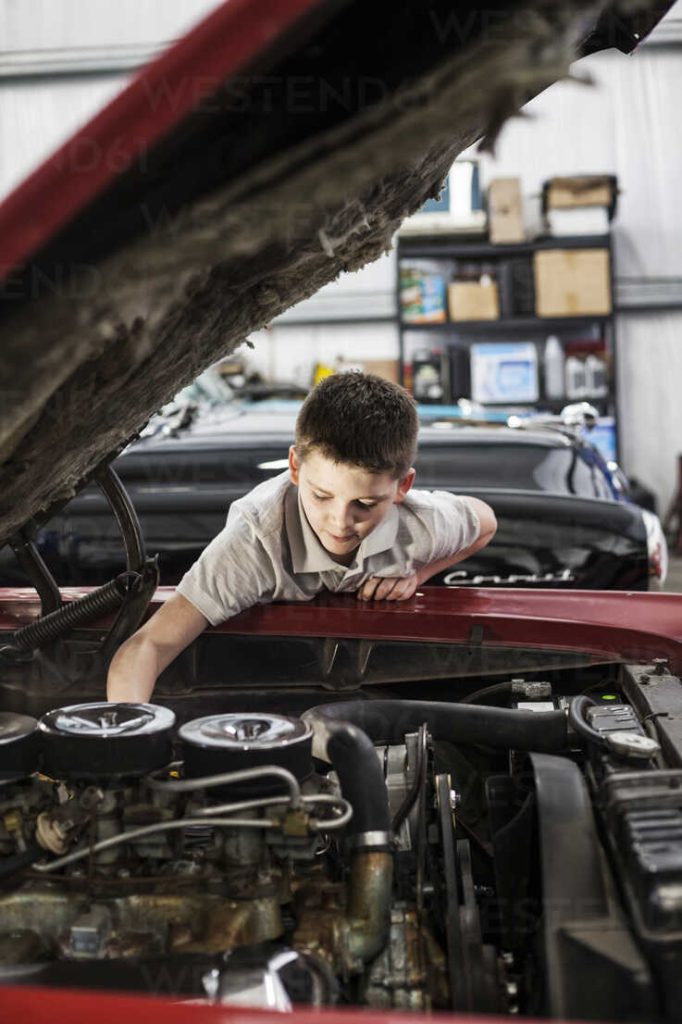
My father was a mechanic, a machinist, and an electronics hobbyist. I grew up in his shop. On weekends — and sometimes after school — I went with him. I cleaned parts in solvent tanks. I chased tools. I swept floors. I watched. I listened. I learned.
By the time I was in middle school, I wasn’t just watching anymore. I was rebuilding Torqueflite transmissions. I was assembling go-karts. I was tearing down and repairing washing machines. I was building crystal radios and Heathkit radio control systems for RC aircraft. That was the environment.
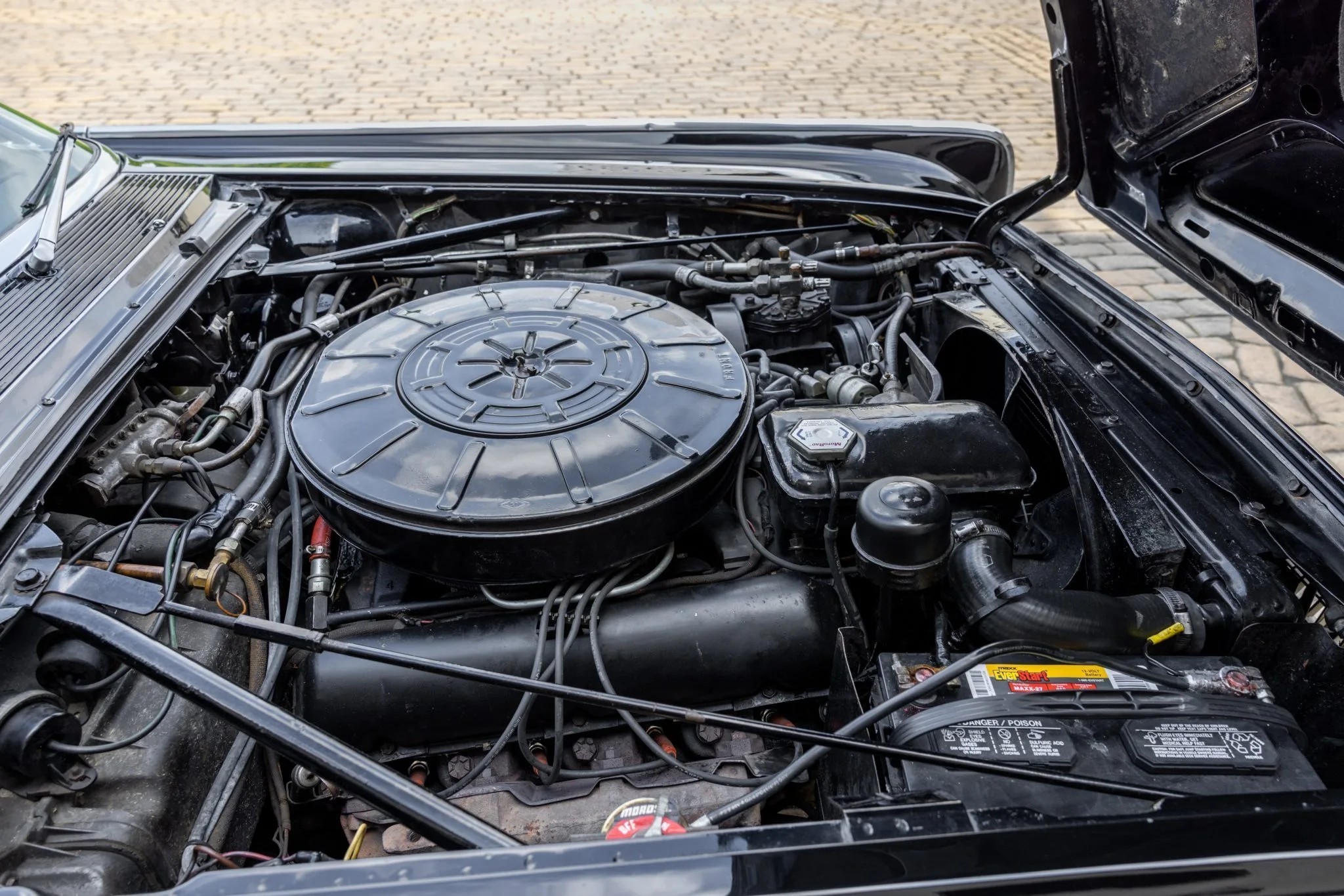
My first car was a 1964 Lincoln Continental with a 440. My father told me I could have it — if I could put hydraulic lifters in it and get it to run. At fourteen, I did exactly that. Because the expectation was clear: if you want something, learn how it works and make it work.
Televisions were repaired at the kitchen table. Engines were rebuilt in home garages. Appliances were opened, diagnosed, and restored rather than discarded. A teenager pulling a cylinder head or rebuilding a transmission wasn’t considered unusual. It was considered useful.
That culture did more than save money. It shaped character, competence, and a national mindset. And it did so without ever needing permission.
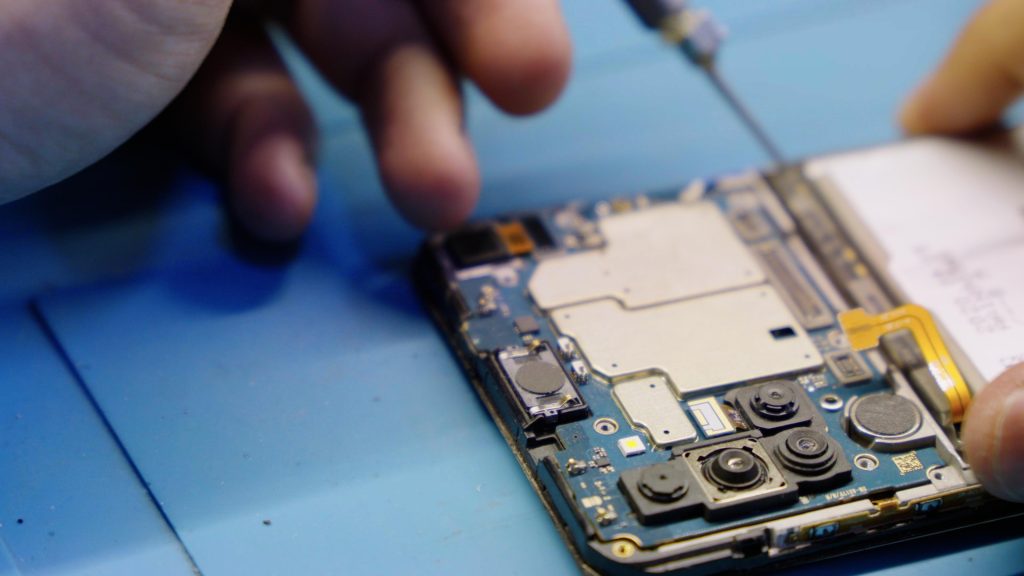
Today, much of that culture has faded. Devices are sealed, software-locked, glued shut, serialized, encrypted, and often deliberately difficult to repair. Minor failures frequently mean total replacement. A cracked plastic gear, a failed capacitor, a worn bearing — things that once meant an evening’s work — now mean a trip to the landfill.
This shift is not trivial. It affects how we think, how we learn, and how competitive we will be in the future.
To understand what we’re losing, you have to remember what we once assumed.
When Repair Was Ordinary
I grew up building everything — furniture, electronics, garden tractors, go-karts, RC aircraft, boats, and electronics. If it had moving parts or wires, we could take it apart and put it back together. We fixed appliances, automobiles, air conditioning units, equipment — whatever broke. Not because we were hobbyists. Because we couldn’t afford not to.
And besides — what fun was there in paying someone else to do it?
In the mid-20th century, repair was built into the design of products:
- TVs had replaceable vacuum tubes.
- Cars had service manuals written for owners.
- Appliances were fastened with screws, not glue.
- Parts were stocked locally.
- Schematics were often included inside the device.
Repair was expected. Manufacturers assumed it. Families assumed it. So did repair shops.
My grandfather was proud of the machines he kept working over his lifetime. Tools were maintained. Equipment was repaired, not replaced. When something lasted decades, it wasn’t luck — it was stewardship.
The lawnmower that “just kept going” was not just equipment. It was proof of responsibility, mechanical literacy, and self-reliance.
When something broke, the question was not “What model should we buy next?” It was “What failed?”
That question teaches something profound. It teaches causality. It teaches systems thinking. It teaches that failures are understandable — and solvable.
The Hidden Education of Repair
Repair is applied engineering.
When you grow up cleaning parts in a shop, you learn that tolerances matter. When you rebuild a transmission, you learn hydraulic circuits and mechanical sequencing — even if you don’t yet know the terminology. When you repair a washing machine, you learn about motors, switches, timing cams, and feedback loops.
When I replaced those hydraulic lifters at fourteen, I wasn’t just fixing a car. I was learning how oil pressure, cam timing, and mechanical geometry interact. That understanding stays with you.
A child who replaces a lifter, rebuilds a carburetor, or fixes a television learns:
- How systems are constructed
- How subsystems interact
- How to diagnose faults
- How to reason from symptoms to causes
- How to persist through uncertainty
These are the foundations of engineering thinking.
Repair teaches humility. You make mistakes. You assemble something incorrectly. You forget a gasket. You tear it back apart. You learn to slow down. You learn to verify. You learn patience.
It teaches ownership. When you fix something, you do not see it as disposable. You see it as earned.
Repair culture functioned as a distributed apprenticeship system. Fathers taught sons. Grandfathers taught grandchildren. Neighbors helped neighbors. It didn’t require formal education. It required curiosity — and access.
And access is the key word.
The Cultural Shift to Disposable
Over the past several decades, multiple forces converged:
- Globalized mass manufacturing reduced replacement cost.
- Planned obsolescence shortened product lifespans.
- Consumer financing normalized constant upgrading.
- Products became software-driven and cryptographically locked.
- Liability and regulatory complexity increased barriers to self-service.
- Marketing shifted identity toward consumption rather than capability.
The result is a consumer culture where a minor issue often means replacement instead of investigation.
When devices become black boxes, people stop opening them. When people stop opening them, they stop understanding them. When they stop understanding them, technology begins to look like black magic.
We have quietly transitioned from a maker culture to a purchaser culture.
When “Qualifications” Replaced Competence
Recently, someone asked me what qualified me to build a CNC CO₂ laser.
It was an honest question. And in today’s culture, it makes sense. We’ve been conditioned to believe that before you build something, you must present credentials.
The truth is this would be my first CO₂ laser. But it would not be my first laser. It would not be my first CNC machine. It would not be my first high-voltage system, control system, motion system, or electronics project.
Each project builds on the one before it.
The first time you repair a washing machine, you learn about motors and switches. The first time you rebuild a transmission, you learn about sequencing and hydraulic control. The first time you build a go-kart, you learn about torque, gearing, and structural rigidity. The first time you design electronics, you learn about power regulation and signal integrity.
By the time you build a CNC CO₂ laser, you are not starting from zero — you are stacking decades of accumulated understanding.
A few decades ago, nobody asked for qualifications. You learned what you needed to know. You studied schematics. You asked questions. You made mistakes. You corrected them. Then you built the thing.
Competence was demonstrated by doing — not declared beforehand.
That mindset produced machinists, mechanics, inventors, radio operators, toolmakers, and engineers. It produced people who were not intimidated by complexity because they had climbed complexity one project at a time.
Today, we often ask, “Who certified you?” instead of “Can you understand it?”
That difference matters.
When a culture begins to doubt the ability of its citizens to learn and build without permission, it shrinks the pipeline of self-made engineers. It replaces apprenticeship with hesitation.
But building has always worked the same way: you learn enough to begin. You begin. You learn more as you go. Each project becomes the prerequisite for the next.
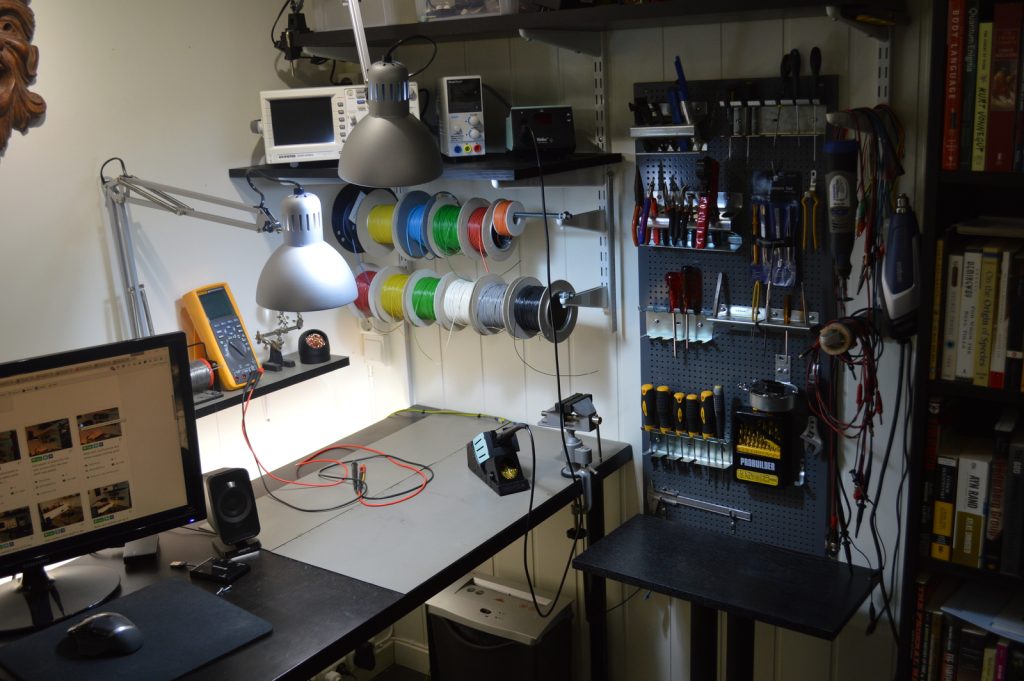
The Right to Repair
The modern right-to-repair movement addresses a structural issue: access.
It argues that owners should have:
- Access to service manuals
- Access to diagnostic tools
- Access to firmware and calibration software
- Availability of replacement parts
- The ability to repair without artificial locks
This is not merely about convenience. It is about sovereignty over property.
When repair is restricted, ownership becomes conditional — and conditional ownership is not true ownership at all.
When I was growing up in my father’s shop, ownership meant you could open the hood. You could pull the transmission. You could machine a part if you had to. No one questioned whether you had permission to understand what you owned.
Today, that assumption is no longer universal.
When repair is restricted, innovation narrows. Independent repair shops disappear. Skills atrophy. The next generation has fewer opportunities to learn by doing.
Every independent repair technician is part of a distributed technical workforce. Every kid who opens something up and fixes it is a potential future engineer.
Competitiveness and the Future
Global competitiveness is not built solely on large corporations. It is built on a culture that produces capable people.
Countries that maintain strong vocational training, maker cultures, and repair infrastructure tend to retain strong manufacturing capability, robust technical education pipelines, skilled trades that support industry, and entrepreneurial ecosystems around maintenance and modification.
If we lose repair literacy, we lose a training ground for future engineers, technicians, and problem-solvers.
Understanding how things break teaches how to design them better. Repair teaches failure analysis. Failure analysis teaches design improvement. Design improvement drives competitiveness.
When I rebuilt transmissions in middle school or brought that Lincoln back to life at fourteen, I wasn’t just fixing machines. I was learning how systems fail — and how to make them work again. That mindset scales from a garage to a nation.
Why This Affects Everyone
This issue is not limited to hobbyists or mechanics.
- Farmers depend on repairable machinery.
- Small businesses depend on serviceable equipment.
- Families depend on affordable maintenance.
- Schools depend on hands-on learning.
- Military readiness depends on field repair capability.
- Infrastructure resilience depends on skilled technicians.
When products are designed to prevent repair, every sector absorbs the cost.
Repair culture is not backward-looking. It is foundational.
The Larger Lesson
What I gained from that upbringing was not just mechanical and electrical skills. It was a way of thinking.
I learned that complex systems are understandable — not mystical.
I learned that competence is built, not granted.
I learned that failure is instruction, not defeat.
I learned that effort changes outcomes.
Those lessons didn’t come from a classroom. They came from solvent tanks, greasy hands, torn-down engines, molten solder, and stubborn machines that refused to cooperate until you understood them.
My grandfather’s pride in keeping equipment running wasn’t nostalgia. It was stewardship — the belief that what you own is your responsibility to maintain, to understand, and to improve.
That belief scales.
A culture that assumes systems are understandable will innovate.
A culture that treats systems as sealed mysteries will merely consume them.
It is about preserving the confidence to open things, question them, and master them. It is about creating the next generation of engineers, repair technicians, mechanics, and machinists — and maintaining a culture of innovation strong enough to compete in the world economy.
Lose that mindset, and we raise operators.
Preserve it, and we raise engineers.
And the future of any nation depends on which of those it produces.