
Together, these tools allow us to assemble, compile, link, inspect, and transform kernel binaries without using the host operating system’s normal compiler target.
Designing a PocketFlow Creator Flow for Queue-Driven RALF Software Development
Purpose This design describes a PocketFlow Creator workflow that accepts a software project folder containing a docs/ subfolder and a project specification, then uses a queue-driven RALF loop to implement the project in ordered, testable increments. The central idea is simple: The LLM may propose.The queue schedules.The gates decide.Git preserves.The human approves high-risk changes. This
Continue Reading “Designing a PocketFlow Creator Flow for Queue-Driven RALF Software Development”
Beyond One-Way Power: Upgrading a Linear Regulator to a Two-Quadrant Linear Power Supply
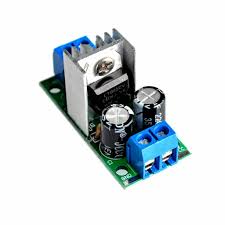
The “Negative Load” Problem Standard linear regulators, like the ubiquitous LM7805, are designed to be “sinks” of power. They take a higher voltage and drop it down, pushing current out of their output pin to power your circuit. However, they are effectively “one-way valves.” In a modern project—especially one involving motors, large inductors, or external
From Fixing to Throwing Away: What We Lost When We Stopped Repairing
The right to repair is not merely about fixing devices. It is about preserving a mindset — that we are builders, maintainers, and stewards.
Continue Reading “From Fixing to Throwing Away: What We Lost When We Stopped Repairing”
Is AI Going to Take My Job?
Every major shift in computing has triggered the same fear: “Is this the end of developers as we know them?” When compilers replaced handwritten machine code, some thought assembly programmers were finished. When high-level languages emerged, others predicted the death of low-level expertise. When frameworks abstracted enormous amounts of boilerplate, people claimed “anyone can build
The One-True-Way Fallacy: Why Mature Developers Don’t Worship a Single Programming Paradigm
In today’s developer landscape, many programmers—both new and seasoned—cling to a single coding paradigm as the “one true way,” dismissing others like object-oriented, functional, or event-driven programming as bloated or misguided. But real engineering maturity comes from knowing why each paradigm exists and when to use it. The most successful developers choose their tools based on risk, scalability, and maintainability—not ideology. This article explores why the refusal to evolve beyond one style limits growth, risks project failure, and ignores decades of hard-earned lessons in software design.
The Pirate Software Paradox: What Happens When Influence Outpaces Skill

There’s a real disconnect between the code that’s visible and the veteran status that’s claimed. This discrepancy isn’t trivial
Continue Reading “The Pirate Software Paradox: What Happens When Influence Outpaces Skill”
The Case Against 3rd Party APIs

Call me a control freak. But after decades in software development, I’ve learned to be cautious, especially when it comes to building systems on top of third-party APIs. While APIs can offer short-term acceleration, they often introduce long-term fragility that you can’t control. Why Relying on 3rd Party APIs Is Risky Using third-party APIs might
Why GAMBAS BASIC Deserves a Place in Your Development Toolbox
One of GAMBAS’s biggest advantages is its fully integrated development environment (IDE), which resembles VB6 and offers an easy-to-use graphical interface. This makes creating forms, handling events, and connecting to databases significantly faster than using more complex frameworks.
Continue Reading “Why GAMBAS BASIC Deserves a Place in Your Development Toolbox”
Developing an Open Hardware Device Programmer
Introduction As an electronics enthusiast with over 50 years of experience, I’ve had the privilege of witnessing the dramatic evolution of computing systems. From the early days of 4 and 8-bit machines with minimal RAM to today’s powerful 64-bit computers with terabytes of storage, the progress has been nothing short of extraordinary. The same transformative
Continue Reading “Developing an Open Hardware Device Programmer”
Recent Comments