Every major shift in computing has triggered the same fear: “Is this the end of developers as we know them?” When compilers replaced handwritten machine code, some thought assembly programmers were finished. When high-level languages emerged, others predicted the death of low-level expertise. When frameworks abstracted enormous amounts of boilerplate, people claimed “anyone can build
Category: Software Development
The One-True-Way Fallacy: Why Mature Developers Don’t Worship a Single Programming Paradigm
In today’s developer landscape, many programmers—both new and seasoned—cling to a single coding paradigm as the “one true way,” dismissing others like object-oriented, functional, or event-driven programming as bloated or misguided. But real engineering maturity comes from knowing why each paradigm exists and when to use it. The most successful developers choose their tools based on risk, scalability, and maintainability—not ideology. This article explores why the refusal to evolve beyond one style limits growth, risks project failure, and ignores decades of hard-earned lessons in software design.
The Pirate Software Paradox: What Happens When Influence Outpaces Skill

There’s a real disconnect between the code that’s visible and the veteran status that’s claimed. This discrepancy isn’t trivial
Continue Reading “The Pirate Software Paradox: What Happens When Influence Outpaces Skill”
The Case Against 3rd Party APIs
Call me a control freak. But after decades in software development, I’ve learned to be cautious, especially when it comes to building systems on top of third-party APIs. While APIs can offer short-term acceleration, they often introduce long-term fragility that you can’t control. Why Relying on 3rd Party APIs Is Risky Using third-party APIs might
Why GAMBAS BASIC Deserves a Place in Your Development Toolbox
One of GAMBAS’s biggest advantages is its fully integrated development environment (IDE), which resembles VB6 and offers an easy-to-use graphical interface. This makes creating forms, handling events, and connecting to databases significantly faster than using more complex frameworks.
Continue Reading “Why GAMBAS BASIC Deserves a Place in Your Development Toolbox”
Developing an Open Hardware Device Programmer
Introduction As an electronics enthusiast with over 50 years of experience, I’ve had the privilege of witnessing the dramatic evolution of computing systems. From the early days of 4 and 8-bit machines with minimal RAM to today’s powerful 64-bit computers with terabytes of storage, the progress has been nothing short of extraordinary. The same transformative
Continue Reading “Developing an Open Hardware Device Programmer”
The Power of Scripting in Managing Development Servers
Discover how scripting can streamline the management of development servers. Learn about the benefits of automation and explore practical examples, including the apache-site-up.py script for managing Apache virtual hosts.
Continue Reading “The Power of Scripting in Managing Development Servers”
Handling Import Conflicts in Python (Versions 3.7 to 3.13)
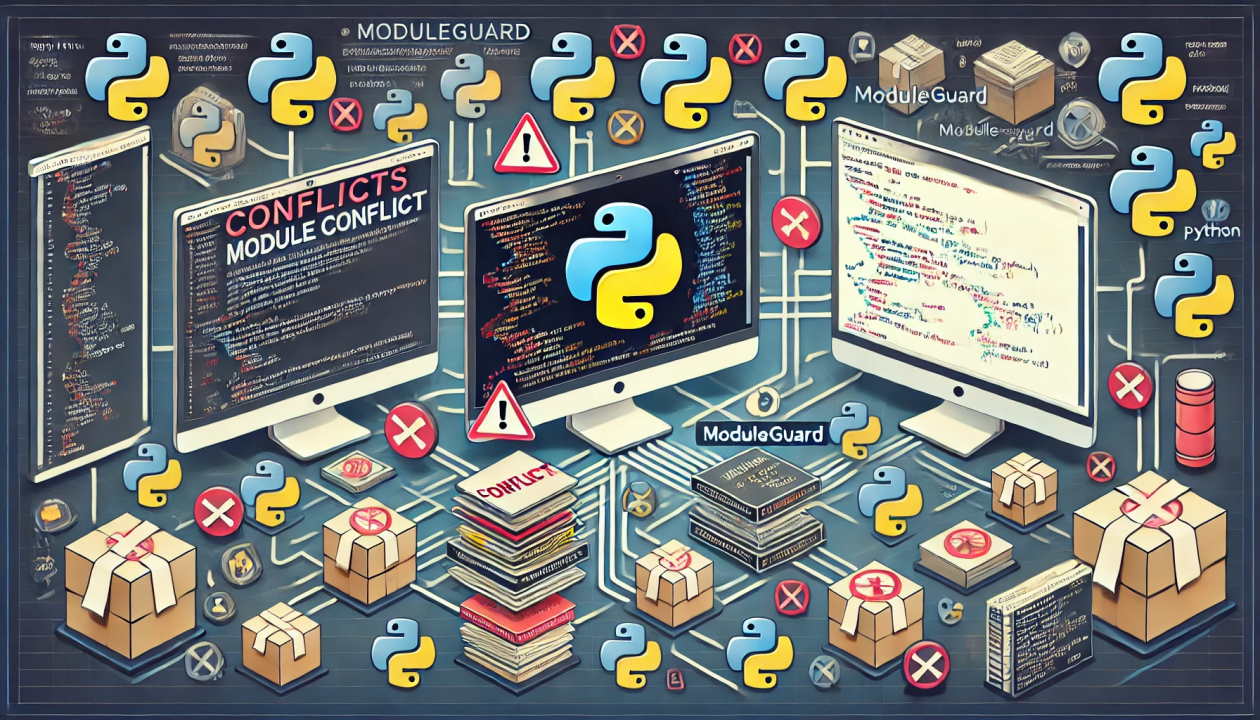
Managing import conflicts in Python is crucial for maintaining clean and efficient code. This article explores various techniques to handle import issues, from simple name conflicts to complex circular imports, covering Python versions 3.7 to 3.13. Learn how to use aliases, virtual environments, sys.path modifications, dynamic imports, and more to resolve common problems and ensure your Python projects run smoothly across different environments.
Continue Reading “Handling Import Conflicts in Python (Versions 3.7 to 3.13)”
OOP is Not What You Think It Is
OOP is Not What You Think It Is
Object-Oriented Programming (OOP) has become one of the most popular paradigms in modern software development, yet it’s often misunderstood. When most people hear “OOP,” they think of classes, inheritance, and the rigid hierarchy of objects—features that languages like C++ and Java have made standard. But this wasn’t the original vision.
The roots of OOP lie in the groundbreaking work of Alan Kay, who introduced the world to the concept in the 1970s through the creation of Smalltalk. For Kay, OOP wasn’t about objects in the way we think of them today—it was about message passing, a way for software components to communicate seamlessly without getting bogged down by the internal structure. In this vision, objects were secondary to the messages they exchanged, which encouraged flexibility, modularity, and dynamic behavior.
Smalltalk: A Different Kind of OOP
Smalltalk wasn’t just a programming language—it was a philosophy. Unlike C++ and other modern OOP languages that focus on complex class hierarchies, Smalltalk treated objects as living entities capable of sending and receiving messages. This idea of message passing was central, allowing objects to respond in ways that weren’t strictly predefined. The focus was on behavior over structure, encouraging experimentation and evolution within a system.
Smalltalk’s version of OOP was lightweight, adaptable, and far less rigid than what we see today. Alan Kay’s emphasis was on how objects collaborate rather than how they inherit from one another. This made systems designed in Smalltalk inherently more flexible, allowing for changes without the fear of breaking the underlying architecture—a stark contrast to the tightly coupled systems often seen in C++-based projects.
What Went Wrong: The Rise of Modern OOP
As languages like C++ gained popularity, the industry’s perception of OOP began to shift. Object-Oriented Programming became synonymous with class-based design, encapsulation, and inheritance. Message passing was sidelined in favor of method invocation, where functions are called directly on objects, leading to more rigid and complex systems.
The shift from Smalltalk’s dynamic message-passing model to the static class structures of C++ marked a fundamental change in how we build software. It wasn’t long before terms like polymorphism, encapsulation, and inheritance became the buzzwords of OOP, but the simplicity and elegance of Kay’s original ideas were lost in the process. Modern OOP became more about managing structure than about fostering communication between entities.
Setting Up a PHP Development Environment on Ubuntu 24.04
Upgrading Ubuntu 18.04 to 20.04 on a server running ISPConfig 3.x can be done safely, but requires careful preparation. In this guide, we discuss how to back up your server, verify ISPConfig compatibility, and perform the upgrade process. By following these steps, you can ensure that the upgrade is smooth and that your websites and services continue running without interruption.
Continue Reading “Setting Up a PHP Development Environment on Ubuntu 24.04”
Recent Comments