
Chapter 7 — A Real Virtual Memory Mapping Layer

Chapter 7 — A Real Virtual Memory Mapping Layer
This entry is part 7 of 16 in the series Writing A Linux Style Operating System From Scratch

In Chapter 5 we enabled paging, but only with a fixed identity map: In Chapter 6 we built a heap, but it still had an important weakness: because only the first 16 MiB were identity-mapped. Now we fix the architectural problem. This chapter adds a small virtual memory manager, or VMM: This lets the kernel

Chapter 6 — Building the First Kernel Heap

Chapter 6 — Building the First Kernel Heap
This entry is part 6 of 16 in the series Writing A Linux Style Operating System From Scratch

In Chapter 5, we enabled paging with a simple identity map: That gave us a working paged kernel, but not yet a comfortable way to allocate variable-sized objects. The physical memory manager gives us whole pages: But kernel code usually needs smaller objects: So this chapter builds the first kernel heap. We will keep it

Chapter 5 — Turning On Paging

Chapter 5 — Turning On Paging
This entry is part 5 of 16 in the series Writing A Linux Style Operating System From Scratch

In Chapter 4, we built the first memory-management layer: Now we add the next layer: paging. Paging lets the CPU translate a virtual address into a physical address through page tables. In 32-bit x86 paging without PAE, a virtual address is split into a page-directory index, page-table index, and page offset; page directories and page

Chapter 4 — Reading the Memory Map and Building a Physical Page Allocator

Chapter 4 — Reading the Memory Map and Building a Physical Page Allocator
This entry is part 4 of 16 in the series Writing A Linux Style Operating System From Scratch

Before we add paging, a heap, processes, filesystems, or user programs, the kernel must answer a basic question: Which physical 4 KiB pages of RAM are safe for me to use? Right now, our kernel can boot, print text, catch CPU exceptions, and receive timer/keyboard interrupts. But it still cannot safely allocate memory. This chapter

Chapter 3 — Hardware Interrupts: PIC, PIT Timer, and Keyboard Input

Chapter 3 — Hardware Interrupts: PIC, PIT Timer, and Keyboard Input
This entry is part 3 of 16 in the series Writing A Linux Style Operating System From Scratch

In Chapter 2 we taught the CPU how to call our code when something goes wrong: Now we will teach the machine how to call our code when hardware wants attention: This is the first step toward a living kernel. A timer interrupt eventually gives us scheduling. Keyboard input eventually gives us a kernel monitor

Chapter 2 — GDT, IDT, and Surviving Your First Kernel Crash

Chapter 2 — GDT, IDT, and Surviving Your First Kernel Crash
This entry is part 2 of 16 in the series Writing A Linux Style Operating System From Scratch

In Chapter 1, we got control of the machine: Now we need something more important than printing text: we need the CPU to call our code when something goes wrong. Right now, if the kernel executes an invalid instruction, divides by zero, touches unmapped memory later, or faults during setup, the machine may reset, hang,

Writing a Linux-style Operating System From Scratch

Writing a Linux-style Operating System From Scratch
This entry is part 1 of 16 in the series Writing A Linux Style Operating System From Scratch

Today, we are beginning a new article series: “Writing a Linux-Style Operating System From Scratch.” In this series, we will walk step by step through the process of creating our own operating system from the ground up. Many operating system tutorials stop shortly after the system boots and prints a simple message on the screen.

Building the i686-elf-gcc Cross-Compiler

Together, these tools allow us to assemble, compile, link, inspect, and transform kernel binaries without using the host operating system’s normal compiler target.

Designing a PocketFlow Creator Flow for Queue-Driven RALF Software Development

Purpose This design describes a PocketFlow Creator workflow that accepts a software project folder containing a docs/ subfolder and a project specification, then uses a queue-driven RALF loop to implement the project in ordered, testable increments. The central idea is simple: The LLM may propose.The queue schedules.The gates decide.Git preserves.The human approves high-risk changes. This

Beyond One-Way Power: Upgrading a Linear Regulator to a Two-Quadrant Linear Power Supply

Beyond One-Way Power: Upgrading a Linear Regulator to a Two-Quadrant Linear Power Supply

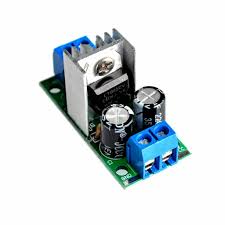
The “Negative Load” Problem Standard linear regulators, like the ubiquitous LM7805, are designed to be “sinks” of power. They take a higher voltage and drop it down, pushing current out of their output pin to power your circuit. However, they are effectively “one-way valves.” In a modern project—especially one involving motors, large inductors, or external